

A dog named Kestrel showed me the difference between cold tolerance and cold preparedness. She was a young Alaskan Husky, and she shivered through her first serious prairie run at minus twenty-two. I pulled her from the line after four miles. That was the right call, and I knew it only because I had been watching her ears.
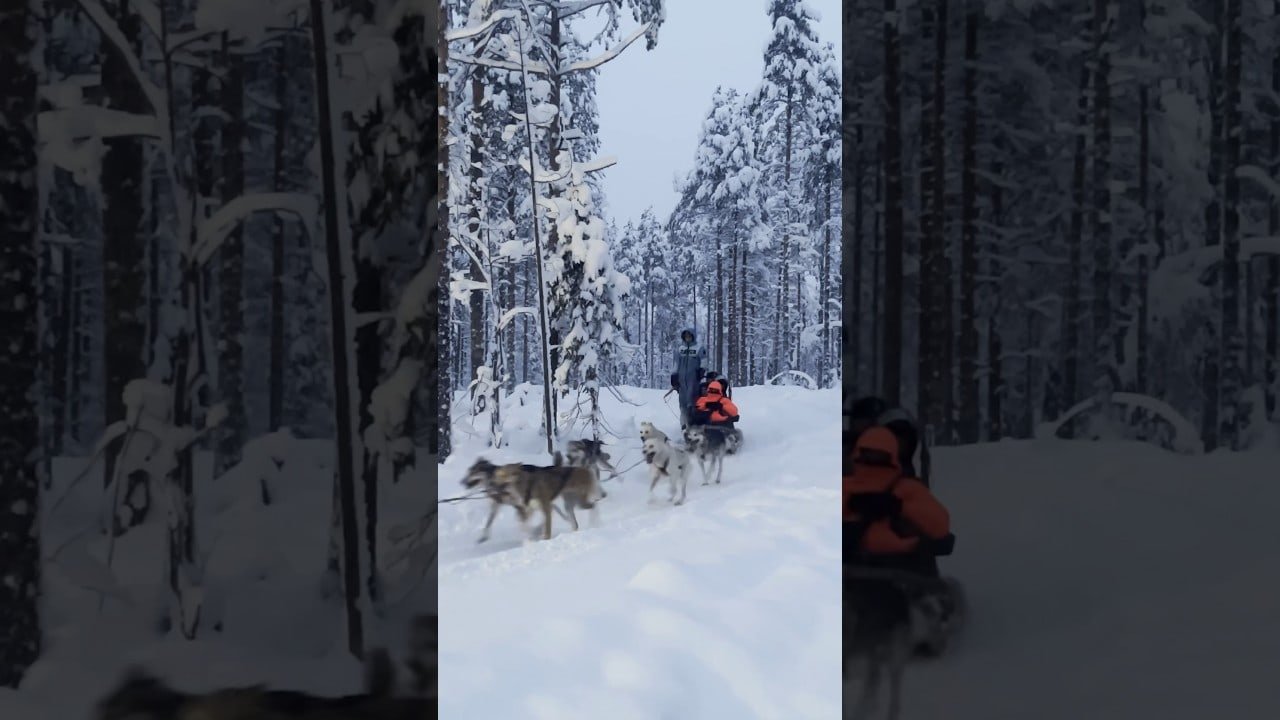
The Yle investigation out of Finnish Lapland documented welfare violations in roughly three-quarters of kennels inspected this April. That is not a rounding error. It is a structural condition, and anyone who has spent time around commercial tourism mushing knows exactly how it develops.
High-volume tourist safari operations create a specific type of management failure. It is not always deliberate cruelty. It is neglect that accumulates when dog numbers exceed the handler’s real capacity to observe each animal. A dog running at minus forty with inadequate coat is not an edge case.
It is what happens when procurement decisions are made for cost rather than condition. The shelter and chain length violations Yle documented are not welfare nuances. They are baseline failures that no market pressure or seasonal tourism cycle justifies.
I had a handler come through Petersburg last winter who had researched harness fitting for two months online. She had watched every video and read every guide, and she fitted the harness completely wrong on the first three dogs. She had the X-back sitting too far forward because no video shows what correct fit looks like when the dog actually moves. One run on trail fixed what two months of online research could not.
Untreated injuries on working dogs do not stay minor. A dog with an unaddressed shoulder problem two weeks into daily tourist runs has a chronic injury by week three. Malnourished dogs cannot thermoregulate effectively, and thermoregulation is the entire game when temperatures fall below minus thirty.
Tellington TTouch gave me a framework for what I was already doing by instinct. Every morning I put hands on every dog before the team moves. The TTouches are not massage. They are a systematic method for detecting changes in tissue quality and pain response before those changes appear in movement.
Commercial operations running forty or sixty dogs per handler cannot do that work. The math does not allow it. When I see photographs of chained dogs in rows with minimal handler presence, I am not seeing cruelty as a philosophy. I am seeing a staffing model that guarantees missed signals.
A dog who flinches at ear work on Tuesday is telling you something. That message will show up in gait by Thursday if you miss it. No operation can receive that signal when handlers are managing too many animals to touch each one.
The SEY campaign is calling for anonymous reporting mechanisms for tourists and seasonal workers. That is correct and necessary. What it requires alongside it is people who know what they are actually looking at. A tourist who reads a dog’s refusal to move as stubbornness cannot report a welfare violation accurately.
I train handlers in Petersburg starting with observation before they touch a gangline. Two days of watching before driving. The first thing I ask them to identify is a dog working willingly versus a dog complying under pressure. The difference is readable once you know it, and invisible until you do.
The Eurogroup for Animals amplification matters because Finnish domestic enforcement has clearly been insufficient. Existing legislation was not protecting dogs in three-quarters of inspected kennels. That means inspection frequency was too low, deterrent consequences were absent, or both.
This investigation is not describing an anomaly in an otherwise sound industry. It is describing the predictable outcome of scaling working dog operations beyond what attentive welfare practice can support.
The dogs in those Lapland kennels are not there because Finnish mushers are uniquely callous. They are there because tourist demand created an industry, and the industry expanded faster than the welfare infrastructure did. When the business model does not budget for individual animal knowledge, the dogs absorb that cost directly.
A working dog team is not a fleet. You cannot add units to meet seasonal demand the way you add equipment. Each dog requires individual knowledge, and that knowledge takes real time to build.
The welfare crisis in Lapland is a scaling problem wearing the face of a cruelty problem, and the industry cannot fix one without honestly confronting the other.
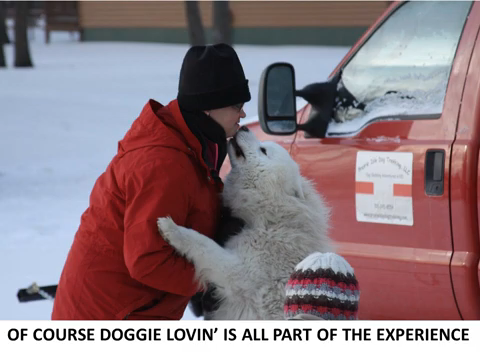
Helen L. Corlew runs a team of Samoyeds, Alaskan malamutes and Alaskan huskies. I am a Tellington TTouch practitioner and use this mode of work with training and living with my dogs.
Helen Corlew founded Prairie Isle Dog Trekking in Petersburg, North Dakota in 2010, and has spent the fifteen years since doing something most people only read about: teaching real dog sledding on real prairie terrain, at the edge of a landscape that doesn’t apologize for being difficult.
She is not a weekend enthusiast. She harnesses working dogs in January cold, trains handlers who have never touched a sled, and has built one of the only hands-on mushing education programs on the Northern Great Plains — from a single address on Highway 2, with no marketing budget and no shortcuts.
Her writing on Prairie Isle Dog Trekking reflects the same philosophy. Whether she is covering trail safety across the Rockies, breed behavior in extreme conditions, or what it actually takes to trek with a dog in the Alps, Helen writes from the position of someone who has done the work before writing the sentence.
She lives and runs dogs in Nelson County, North Dakota.
Kindly follow me on Social Media!
